Every modification we perform is built with ADA accessibility standards in mind — from the first nail to the final walkthrough. Here's a full breakdown of what we offer and what you can expect.
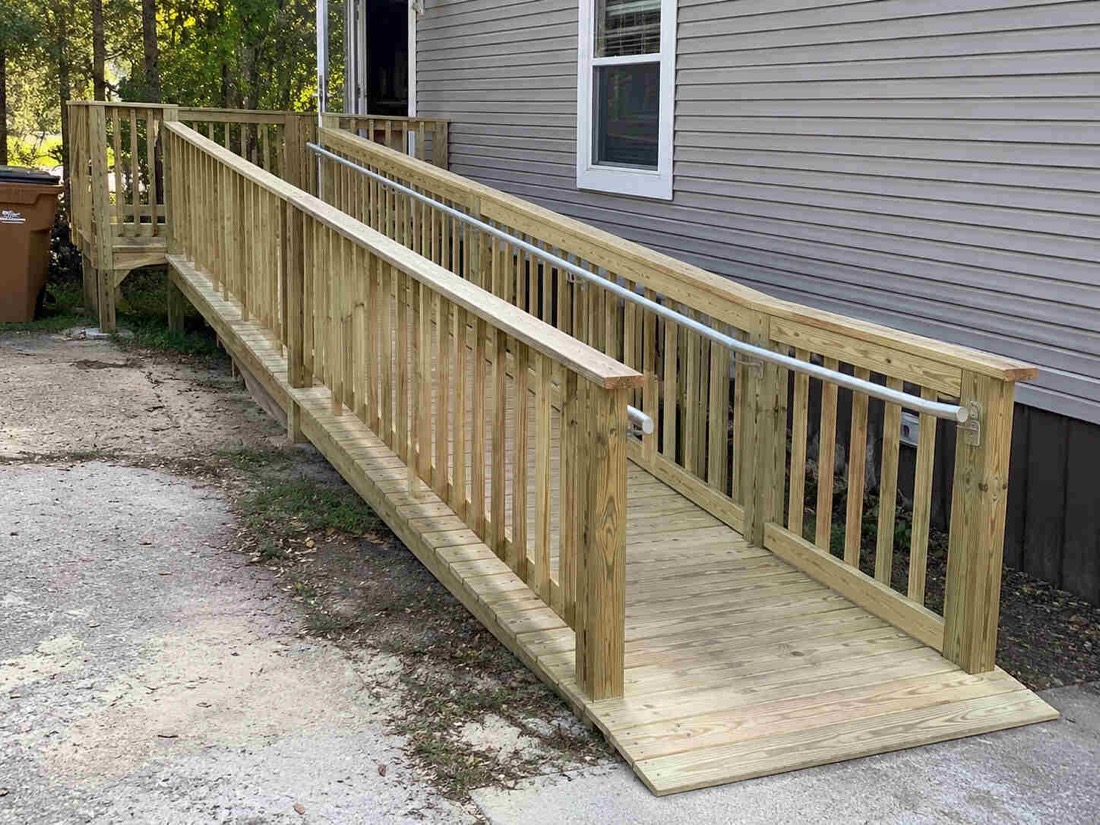
A well-built ramp isn't just wood and hardware — it's the difference between independence and relying on others every time you leave or enter your home. We custom-build every ramp to fit your specific entry, meet ADA slope requirements, and handle real Louisiana weather year-round.
We use pressure-treated lumber rated for ground contact, galvanized fasteners, and non-slip decking materials. Every ramp includes proper handrails on both sides and is engineered for the weight loads required by ADA guidelines.
ADA Slope Requirement: The standard slope ratio for wheelchair ramps is 1:12 — meaning 1 inch of rise for every 12 inches of ramp length. We measure and build every ramp to this exact specification.
Not enough room for a full ramp run? A vertical platform lift can solve the same access problem in a much smaller footprint.
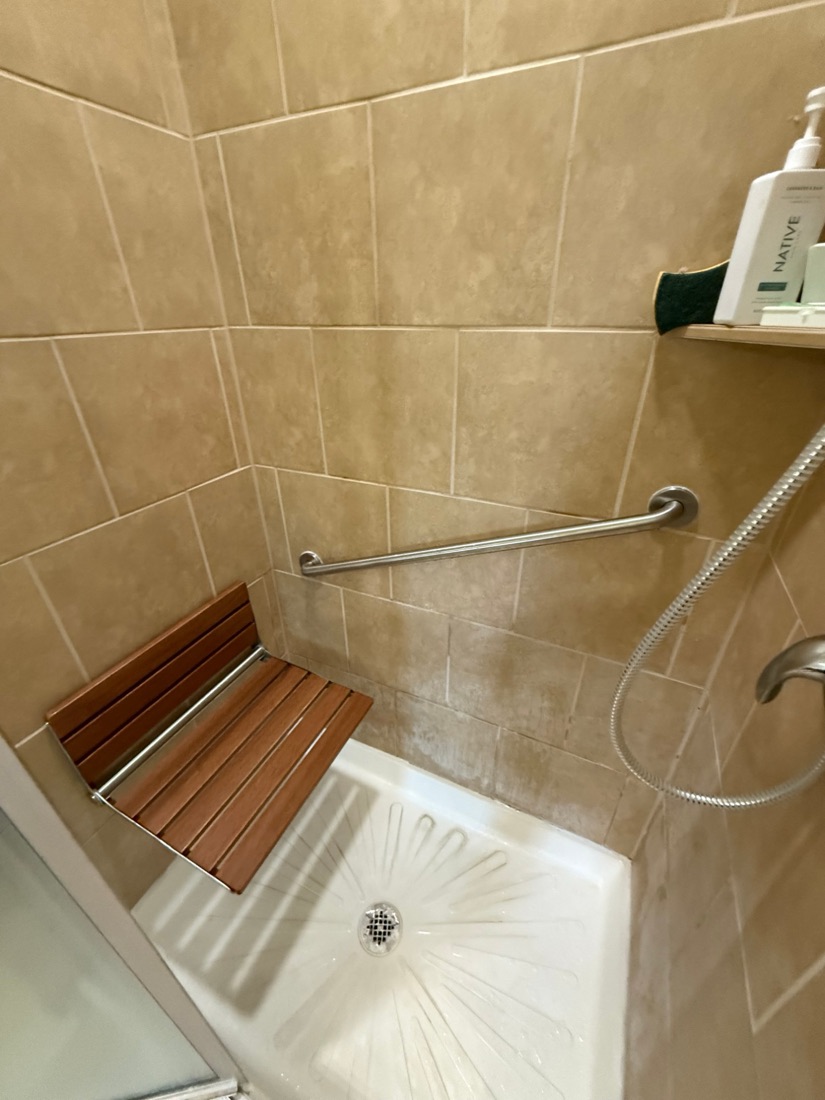
Falls are the leading cause of injury for elderly adults at home — and most happen in the bathroom. Properly installed grab bars are one of the single most effective modifications you can make. The key word is properly: a bar screwed into drywall alone will fail. We anchor every bar directly into wall studs or use backing boards for maximum load strength.
We install bars in tub surrounds, showers, beside toilets, along hallways, and on stairways — wherever support is needed. We also offer a range of finishes to match your existing fixtures.
Why proper anchoring matters: A grab bar should support 250 lbs of force in any direction per ADA guidelines. We never rely on drywall anchors alone — every bar goes into structural framing or a backing board.
Planning a bigger bathroom update? Grab bars are included in every accessible bathroom remodel we do.
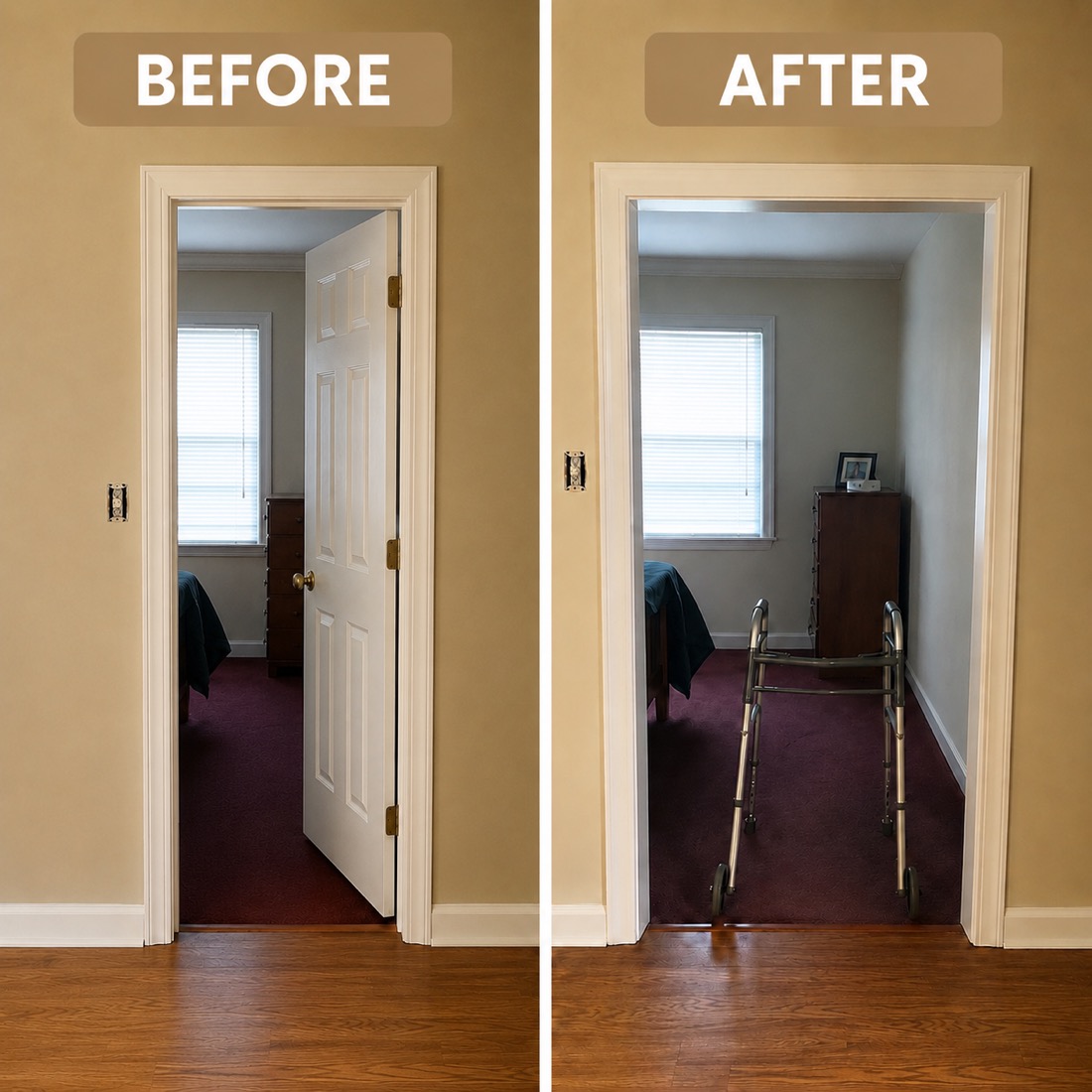
Standard interior doorways are typically 28–30 inches wide — too narrow for most wheelchairs and many walkers. Widening a doorway to 32–36 inches of clear opening is a structural modification that requires removing framing, adjusting load paths in some cases, and finishing it out so it looks like it was always that way.
We handle the full scope: framing, drywall, trim, hardware, and paint-ready finish work. You'll never know the wall was touched, but you'll have the clear access you need for daily independent living.
ADA standard: Doorways must provide a minimum 32-inch clear opening (measured from the door face to the opposite stop) — with 36 inches recommended for comfortable wheelchair passage in most residential applications.
Widening an exterior doorway? It's often paired with a wheelchair ramp for complete entry access.
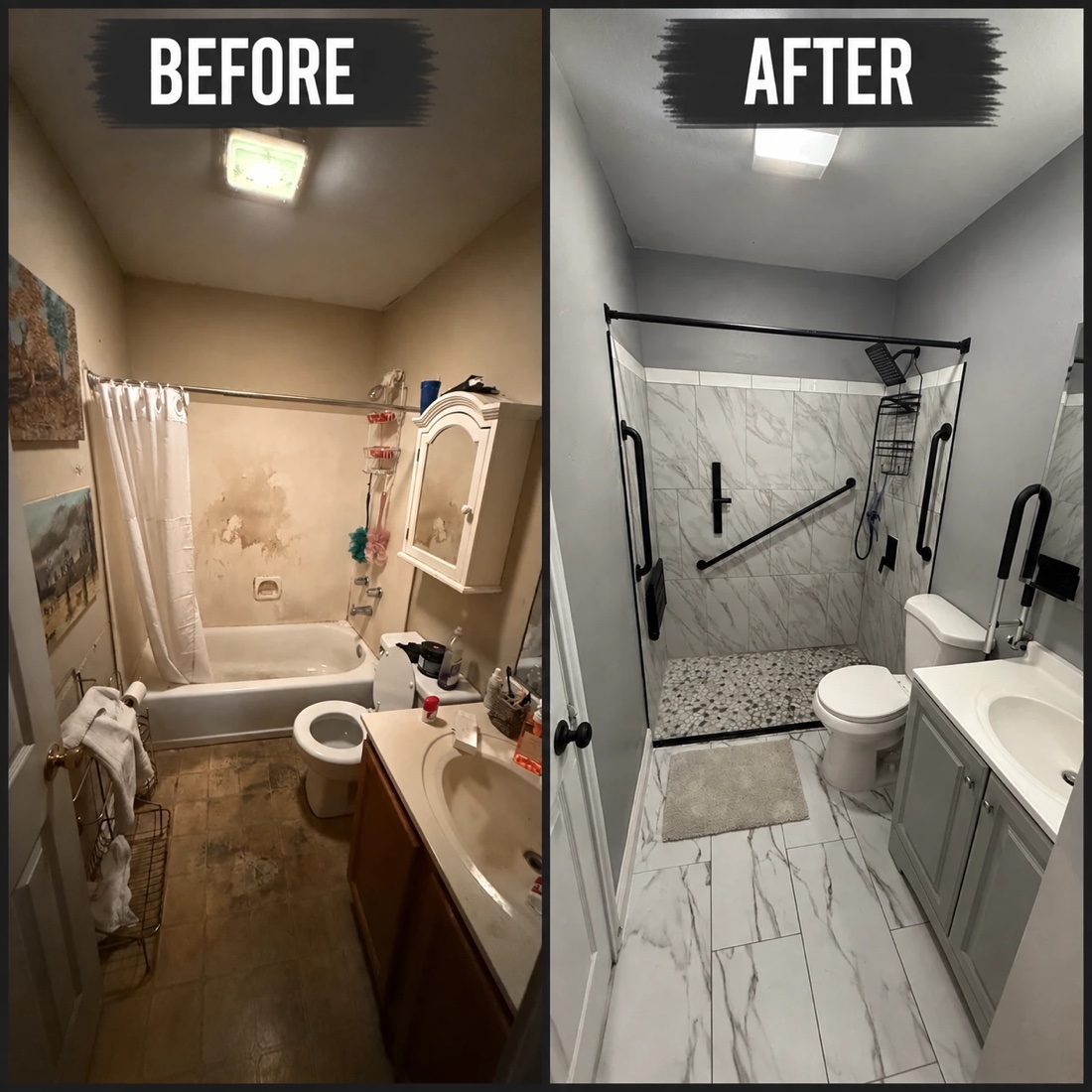
Stepping over a tub wall or a shower curb is one of the most dangerous moments of the day for elderly and disabled residents. We eliminate that barrier entirely — either by converting your existing tub to a zero-threshold roll-in shower, cutting down the tub wall for a safe step-in entry, or remodeling the entire bathroom around accessibility from the studs out.
Every conversion is fully waterproofed using a membrane system before tile work begins. We finish with slip-resistant tile, proper linear drain placement, integrated grab bars, and — when the project calls for it — a comfort-height vanity, new fixtures, and updated flooring so the whole room works together.
Waterproofing first: We never tile directly over drywall in wet areas. Every conversion uses a proper waterproofing membrane — the most important step most contractors skip. We don't.
Not every home can accommodate a ramp, and not every accessibility problem is at the front door. When stairs are the only way to reach a bedroom, bathroom, or living space, a stair lift provides safe, seated transport up and down a single flight — without the cost or disruption of structural remodeling.
We assess your staircase in person, help you choose between a straight or curved rail system based on your layout, and handle the full installation so the lift is secure, smooth, and ready to use.
Who it's for: Stair lifts are often the right call when a permanent ramp isn't structurally or financially practical — a common, cost-effective solution for aging in place without leaving a multi-level home.
Dealing with porch steps instead of an interior staircase? A vertical platform lift may be the better fit.
Some entries just don't have room for a code-compliant ramp — porch steps, split-level decks, and tight side yards are common culprits. A vertical platform lift (VPL) solves the same problem in a fraction of the footprint, raising a wheelchair or scooter straight up to the entry instead of requiring dozens of feet of ramp run.
We evaluate your entry, recommend an indoor or outdoor-rated unit sized for your space and weight needs, and handle installation and any required permitting.
Ramp vs. VPL: ADA slope guidelines require 1 foot of ramp for every inch of rise — a 3-foot porch needs a 36-foot ramp. When there's no room for that, a vertical platform lift covers the same rise in a footprint of a few feet.
Need to get between floors inside the home instead? See our stair lifts.
Free — No Obligation
Fill out the form and we'll get back to you within one business day to schedule your free home assessment.